


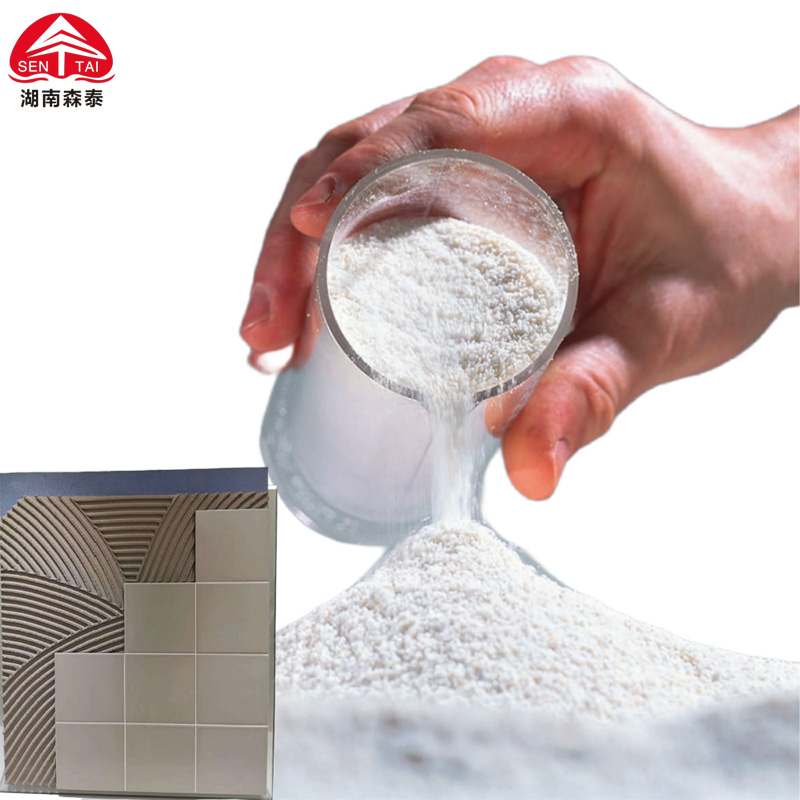

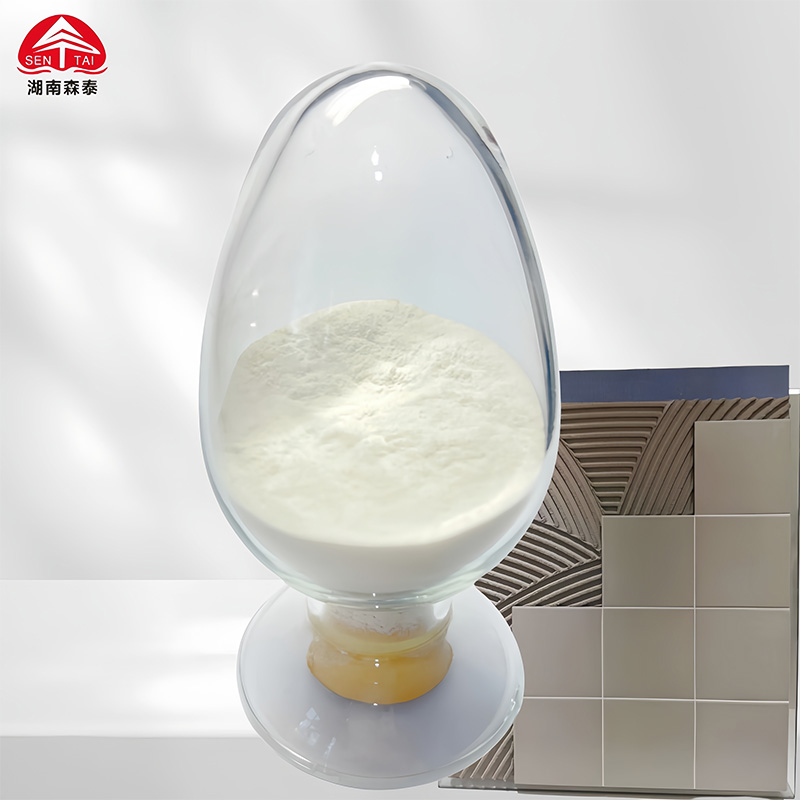


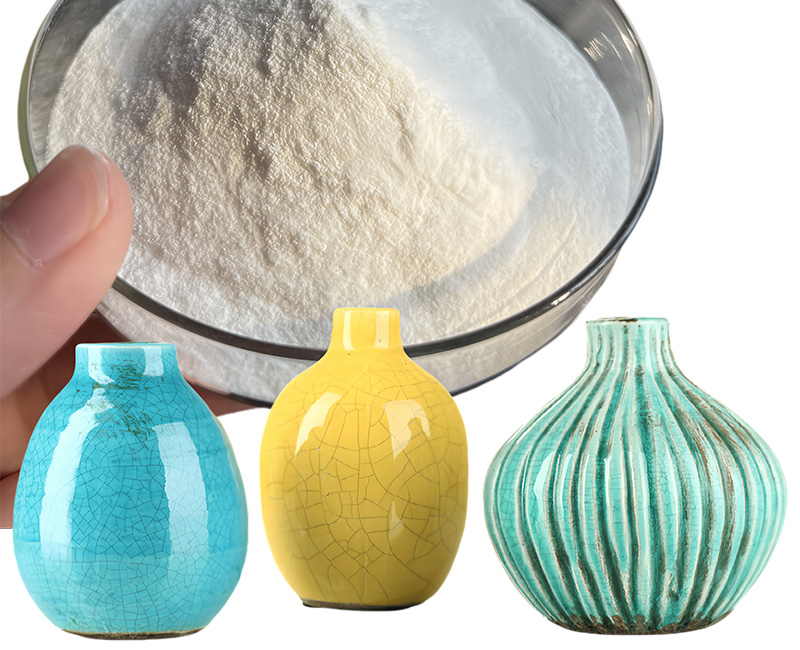

Ceramic Grade CMC is used in ceramic bodies, glazing pulp, decorative glazes, ceramic printing glaze, and ceramic penetration glaze. It works as a strengthening agent, binder, suspension agent, deflocculant, plasticizer, excipient, and water-retention additive, helping improve body shaping, green body strength, glaze stability, printing performance, and penetration glaze consistency.
| Quantity: | |
|---|---|


CMC is utilized in various ceramic applications, including ceramic bodies, glazing pulp, and decorative glazes. As an additive in ceramic bodies, CMC acts as a strengthening agent, enhancing the moldability of clay and sand materials, facilitating shape formation, and increasing the green body’s folding strength. In glazing pulp and decorative glazes, CMC serves as a binder, providing functions such as suspension, deflocculation, and water retention.
When CMC, a unique linear polymer, is added to water, its hydrophilic groups interact with water, forming a solvation layer that gradually disperses CMC molecules. The high molecular weight CMC develops a supporting network structure stabilized by hydrogen bonds and Van der Waals forces, showcasing its bonding capabilities. In the ceramic industry, CMC acts as an excipient, plasticizer, and reinforcement.
1. Minimal usage yields significant improvements in the breaking strength of the green body.
2. Increases processing speed and reduces energy consumption.
3. Exhibits low ignition loss, burns without residue, and does not affect the original color.
4. Facilitates technological processes by preventing issues like crawling and dry spraying.
5. Enhances deagglomeration, increasing glaze fluidity and simplifying glaze application.
6. Serves as an excipient for the raw material, improving clay plasticity and facilitating body shaping.
7. Offers strong resistance to mechanical wear, with minimal disruption to molecular chains during ball milling or mechanical stirring.
8. Functions as a reinforcer for raw materials, increasing breaking strength and stability while reducing damage rates.
9. Demonstrates excellent suspension and dispersion properties, preventing clumping of lean materials and color pastes, ensuring even distribution.
10. Promotes uniform moisture evaporation from raw materials, preventing drying and cracking, particularly effective for larger floor and polished tiles.
CMC acts as a polyelectrolyte, functioning as both a binder and a suspension agent. When incorporated into glaze pulp, water enters the gel, and the hydrophilic groups interact with water, causing it to swell. The gel becomes hydrated within while forming a bound water layer on the exterior. Initially, micelles in the liquid cement are free; however, due to their various sizes and shapes, they cluster together through Van der Waals forces and bond with the water layer, creating a large network structure with enhanced adhesive properties.
1. Rheological properties can be effectively modified with low concentrations, aiding in the enameling process.
2. Improves the bonding capacity of the substrate, significantly enhancing glaze surface strength and preventing peeling.
3. Produces a high gloss finish on the glaze surface and stabilizes the glaze pulp, reducing pinholes post-firing.
4. Exhibits outstanding spreading and colloid protection properties, maintaining stable dispersion of glazing pulp.
5. Increases the surface tension of glaze materials, preventing water absorption into the substrate, thereby enhancing glossiness.
6. Reduces the risk of cracking and damage during transportation by maintaining structural integrity post-enameling.
CMC offers excellent solubility and high transparency in its solutions, leaving no residue. Its shear-thinning and lubrication properties significantly improve the adaptability for printing applications. CMC applied in ceramic printing glazes demonstrates excellent thickening, dispersion, and stabilizing effects:
1. Provides optimal printing rheology for smooth application.
2. Ensures clear patterns and consistent coloration during printing.
3. Achieves a high level of smoothness, good lubrication, and excellent overall results.
4. Features good water solubility with no residue, preventing clogging of screens.
5. Offers high solution transparency and effective net permeability.
6. Demonstrates outstanding thixotropic and lubricating properties, greatly enhancing applicability in ceramic glaze printing.
Penetration glazes often contain soluble salts with partial acidic properties. CMC in these glazes exhibits excellent stability against acid, salt, and maintains consistent viscosity during use or storage, preventing color variations due to viscosity changes, thus greatly enhancing stability.
1. Exhibits good solubility and effective net permeability without clogging.
2. Offers compatibility with glazes, ensuring stability in decorative glazes.
3. Demonstrates good stability against acids, alkalis, and salts, maintaining viscosity in penetration glazes.
4. Provides excellent leveling properties and stability in viscosity, preventing chromatic aberrations from viscosity fluctuations.
Type | Viscosity (mPa.s) | Degree of Substitution (DS) | Purity (%) | pH | Drying loss (%) |
C-1001 | 1%, 400-700 | ≥1.0 | ≥95 | 6.5-8.5 | ≤10 |
C-1002 | 1%, 400-700 | ≥0.95 | ≥95 | ||
C-1592 | 1%, 800-1200 | ≥0.90 | ≥95 | ||
C-0492 | 1%, 200-400 | ≥0.95 | ≥95 | ||
C-1583 | 1%, 800-1200 | ≥0.8 | ≥80 | ||
C-0664 | 2%, 400-700 | ≥0.60 | ≥60 | ||
C-2074 | 1%, 2000-2500 | ≥0.90 | ≥90 | ||
IM8 | 2%, 700-1000 | ≥0.80 | ≥90 | ||
9L | 1%, 30-50 | ≥0.90 | ≥90 |
*We can customize according to the client's required specifications.
