


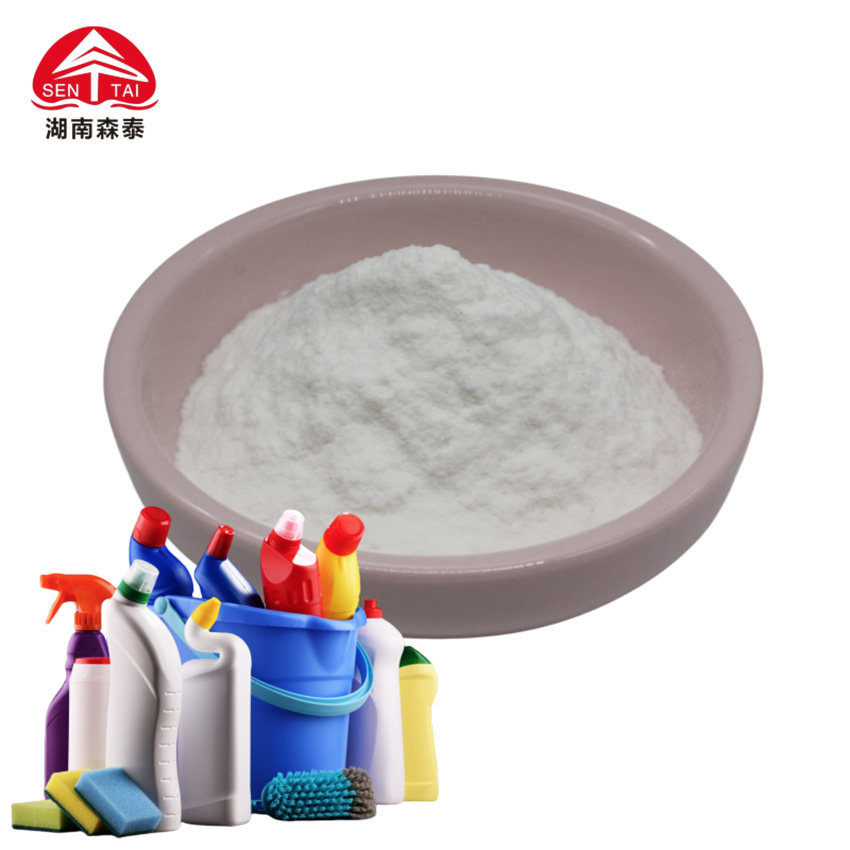

As a leading manufacturer and supplier of specialized chemical additives, we offer high-performance Detergent Grade Carboxymethyl Cellulose (CMC) designed to elevate the cleaning efficiency of household and industrial formulations. This anionic cellulose ether acts as a multifunctional agent, serving primarily as a soil anti-redeposition polymer that ensures fabrics remain bright and clean after multiple washes. Our production process utilizes high-quality cellulose sources, resulting in a product with exceptional cold-water solubility and consistent rheological properties. Whether integrated into heavy-duty laundry powders or delicate liquid detergents, this grade provides the stability and performance required by global detergent manufacturers.
| Quantity: | |
|---|---|


Operating as a primary manufacturer and global supplier of specialized chemical additives, we provide industrial-grade Detergent Grade Carboxymethyl Cellulose (CMC) engineered to maximize the cleaning efficacy of both household and commercial washing formulations. This anionic cellulose ether functions as a highly effective multifunctional polymer, serving primarily as a soil anti-redeposition agent that guarantees fabrics maintain their original brightness and cleanliness across numerous wash cycles. Leveraging large-scale production capabilities, we ensure a stable, cost-effective global supply chain that significantly reduces overall formulation expenses for our partners. Our controlled manufacturing process utilizes premium cellulose derivatives, yielding a fine, white to cream-colored powder characterized by exceptional cold-water solubility and highly consistent rheological behavior. Whether you are formulating heavy-duty laundry powders, concentrated liquid detergents, or specialized fabric care solutions, this additive delivers the precise stability and performance metrics demanded by leading detergent formulators worldwide. Furthermore, we offer comprehensive technical support, providing customized purity levels (such as ≥ 50%, ≥ 60%, or up to 90%) and tailored substitution degrees to meet your specific production requirements.

Detergent Grade CMC is widely recognized throughout the laundry formulation sector as an essential "anti-graying" compound, playing an indispensable role in preserving both the visual appeal and structural integrity of woven textiles. During an active wash cycle, surfactants successfully detach embedded dirt, oils, and particulate matter from fabric fibers; however, without a reliable stabilizing polymer, these suspended soils inevitably redeposit onto the garments, resulting in a dull, yellowish, or grayish tint over time. Our cellulose ether resolves this by establishing a negatively charged protective barrier around both the fabric surface and the detached soil particles. This strong electrostatic repulsion traps dirt within the aqueous wash medium, ensuring it is thoroughly flushed away during the final rinse.
Beyond its critical anti-redeposition capabilities, this polymer significantly elevates the end-consumer experience. It imparts a noticeable softness to treated fabrics, reduces potential skin irritation caused by harsh chemical residues, and actively locks in dyes to keep white garments whiter and colored fabrics visibly brighter. For optimal performance, we recommend a precise dosage ranging from 0.1% to 1.0% of the total formulation weight. To prevent lumping during production, formulators should adopt a standardized mixing protocol, slowly sifting the powder into the vortex of well-agitated water or pre-blending it with dry ingredients before liquid introduction. As a powerful thickener, it prevents phase separation in liquid detergents, ensuring a uniform, aesthetically pleasing texture that flows smoothly on automated packaging lines and maintains structural integrity in powder granules by minimizing airborne dust.
Property | Specification |
Appearance | White to cream-colored powder/granules |
Purity (Dry Basis) | ≥ 55.0% - 90.0% (Customizable) |
Degree of Substitution (D.S) | 0.50 – 0.90 |
Viscosity (1% Solution, 25°C) | 10 - 100 mPa.s / 300 - 500 mPa.s |
pH Value (1% Solution) | 6.5 – 8.5 |
Moisture Content | ≤ 10.0% |
Particle Size | Min. 95% pass 80 mesh |
Solubility | Rapidly soluble in cold and warm water |
The technical superiority of our detergent-grade additive stems from rigorous molecular engineering, delivering distinct, measurable advantages for modern cleaning formulations:
Superior Anti-Redeposition Performance: A carefully calibrated degree of substitution generates a strong ionic charge, actively preventing microscopic soil particles from adhering to synthetic blends and natural cotton fibers alike.
Excellent Thickening and Rheology Control: Imparts a smooth, honey-like viscosity to liquid detergents, improving the tactile pouring experience and preventing splashing during consumer use.
Formulation Compatibility and Restrictions: Exhibits excellent stability alongside anionic, non-ionic, and amphoteric surfactants, as well as common enzymes. Formulators should note that to maintain polymer integrity, co-formulation in highly acidic environments (pH < 2) or with specific heavy metal salts should be avoided, thereby reducing trial-and-error during R&D.
Cold Water Instant Solubility: Designed specifically for energy-efficient, low-temperature washing machine cycles, the granules dissolve rapidly and completely, leaving absolutely no sticky residue on garments or internal machine components.
Quality Control and Environmental Compliance: Subjected to strict batch-to-batch stability testing, this plant-derived cellulose product is 100% biodegradable. It breaks down safely in municipal wastewater treatment facilities, assisting brands in meeting increasingly stringent international environmental regulations.
Protective Colloidal Action: Effectively stabilizes the suspension of solid particulates and active ingredients within liquid matrices, completely halting sedimentation during prolonged warehouse storage and international transit.
Grasping the underlying physical chemistry of this cellulose derivative is essential for formulators seeking to maximize their recipe's efficiency. The core efficacy of this additive relies on its capacity to fundamentally alter the interfacial tension dynamics between the active wash liquor and the textile substrate.
Upon dissolution in the wash water, the carboxymethyl groups attached to the polymer backbone ionize, becoming strongly negatively charged. These ions naturally migrate toward and adsorb onto the fabric surface—particularly excelling on cotton and other cellulose-based fibers—generating a uniform negative potential across the material. Because the detached soil particulates also carry a negative charge (either inherently or via surfactant adsorption), the polymer induces a powerful "like-charge" repulsion. This physical barrier keeps dirt particles continuously suspended within the liquid medium, preventing them from settling back into the weave.
While standard builders such as zeolites, silicates, or phosphates focus primarily on softening the water by binding calcium and magnesium ions, our cellulose ether operates in direct synergy with these components to regulate the total ionic strength of the wash environment. This collaborative action prevents the "salting out" phenomenon, ensuring the polymer retains its full spatial extension and active suspension capabilities even when deployed in extremely hard water conditions.
By actively blocking the deep penetration of microscopic grit and abrasive soils into the intricate textile weave, this additive significantly reduces the physical friction and wear on individual fibers during the machine's mechanical agitation cycle. This protective mechanism not only maintains the fabric's inherent tensile strength but also noticeably extends the functional lifespan of the garments, offering a premium value proposition for the end user.
To support strict factory safety standards and SDS compliance, proper handling protocols must be strictly observed. As a fine organic powder, airborne dust should be minimized to prevent respiratory irritation and mitigate any risk of dust deflagration. Facility operators should ensure adequate local exhaust ventilation and provide personnel with appropriate personal protective equipment (PPE), including NIOSH-approved dust masks, safety goggles, and protective gloves during the transfer and mixing phases.
For maximum shelf life and sustained chemical efficacy, the product must be stored in a cool, well-ventilated, and strictly dry environment. The hygroscopic nature of the powder means it will readily absorb ambient moisture if left exposed; therefore, all multi-wall paper bags or bulk supersacks must remain tightly sealed when not in active use. Pallets should be kept elevated off the floor and positioned away from direct sunlight or incompatible materials such as strong oxidizers and concentrated acids.
