


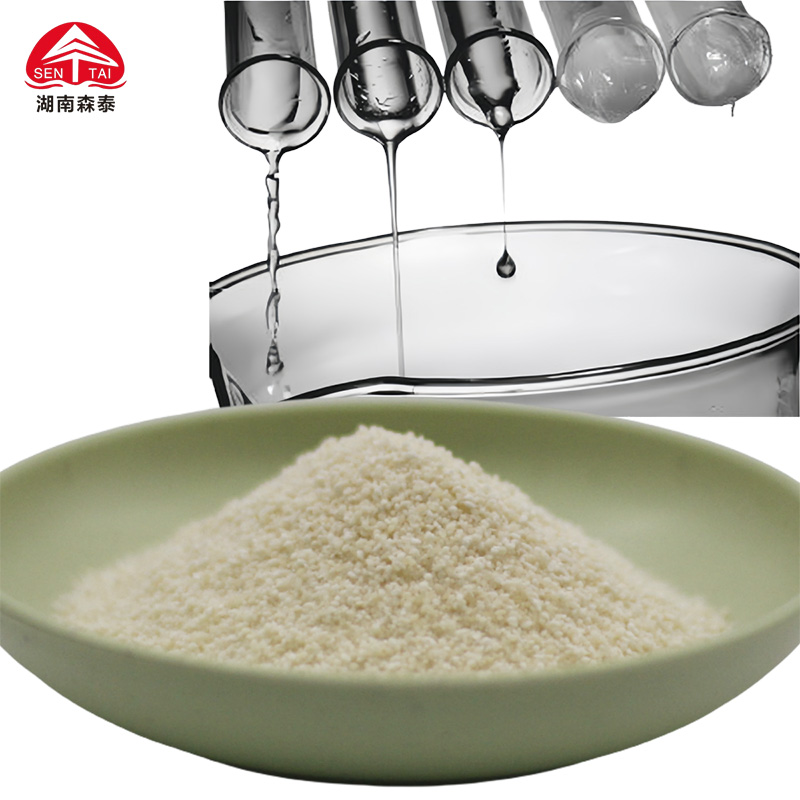


Granular CMC is a granular type sodium carboxymethyl cellulose product designed for easier handling, controlled dissolution, and uniform dispersion compared with powdered CMC. It dissolves in water to form viscous solutions and can be used for thickening, stabilizing, binding, dispersion control, and process performance improvement across different industrial applications.
| Quantity: | |
|---|---|


Granular Carboxymethyl Cellulose (CMC) is a high-purity, water-soluble cellulose derivative engineered for superior functionality across diverse industries. Derived from renewable plant-based sources, this eco-friendly polymer is chemically modified to replace hydroxyl groups with carboxymethyl groups, enhancing its solubility and anionic properties. The granular form offers distinct advantages in handling, controlled dissolution, and tailored applications compared to powdered variants.
Key Features
1. Enhanced Solubility & Purity
Granular CMC dissolves rapidly in water, forming viscous solutions ideal for thickening, stabilizing, and binding. Its high purity ensures consistency in industrial processes, meeting food, pharmaceutical, and cosmetic standards.
2. Adjustable Degree of Substitution (DS)
Optimized DS (0.6–1.5) through advanced synthesis techniques (e.g., Response Surface Methodology) ensures tailored performance for specific applications, such as high viscosity or rapid hydration.
3. Thermal Stability & Biocompatibility
Exhibits excellent thermal resistance, making it suitable for high-temperature processes (e.g., ceramic sintering). Its biocompatibility ensures safe use in food, pharmaceuticals, and biomedical applications.
Applications
Food Industry
1. Acts as a thickener, emulsifier, and stabilizer in sauces, dairy products, and baked goods.
2. Improves texture and shelf life without altering flavor.
Mining Industry
In the mining and mineral processing industry, granular carboxymethyl cellulose (CMC) stands out for its unique physical form and chemical properties, significantly enhancing traditional powdered CMC’s performance. It serves as a critical functional material for improving efficiency and reducing environmental impact. Below are its core roles in mining applications:
1. Mineral Flotation: Precision Surface Activity Control
• Selective Inhibition of Gangue Minerals
Granular CMC releases active components gradually through controlled dissolution, enabling precise adsorption on gangue minerals (e.g., serpentine, talc). This alters surface charge and wettability to optimize separation:
• Mg-Silicate Suppression: In nickel ore flotation, granular CMC’s sustained release inhibits serpentine buoyancy, reducing MgO content in concentrates by over 30% and boosting nickel grade.
• Target Mineral Recovery: Prevents hetero-aggregation between pyrite and gangue via electrostatic repulsion, increasing pyrite recovery by >80% at pH <11.
• Controlled Dissolution
Granular form prevents rapid clumping, ensuring uniform dispersion in slurries and avoiding over-suppression from localized high concentrations.
2. Slurry Stabilization: Optimized Rheology & Energy Efficiency
• Effective Dispersion & Anti-Sedimentation
• Horizontal Adsorption: Granular CMC forms horizontal adsorption layers on clay minerals (e.g., montmorillonite), enhancing electrostatic repulsion to prevent slurry stratification or settling.
• Dynamic Viscosity Control: Adjusting granule size (e.g., 0.5–2 mm) tailors dissolution rates to match viscosity requirements across slurry transport stages (e.g., pipelines, agitation tanks), reducing pumping energy consumption.
3. Tailings Management: Enhanced Sustainability
• Tailings Dewatering & Stabilization
As an eco-friendly flocculant, granular CMC accelerates tailings particle aggregation, reduces suspended solids in wastewater, and forms stable gel structures to suppress heavy metal leaching.
• Dust Suppression
Granular form minimizes airborne dust during handling, improving workplace safety and reducing material loss.
4. High-Temperature/Saline Resistance: Extreme Condition Reliability
• Thermal Stability: Maintains molecular integrity in high-temperature slurries (e.g., copper leaching >60°C), preventing viscosity collapse.
• Salt Tolerance: Effectively disperses mineral particles in high-salinity brines (e.g., lithium extraction), avoiding salt-induced performance degradation.
Agriculture
1. Enhances soil structure by increasing porosity and water retention when combined with magnetized irrigation systems.
2. Reduces soil compaction and improves nutrient uptake in crops like jujube, boosting yield by up to 15.98%.
Environmental Remediation
1. Used in hydrogels (e.g., combined with pullulan) for efficient removal of toxic dyes (e.g., malachite green) from wastewater, achieving adsorption capacities up to 1,937 mg/g.
2. Immobilized on bio-sorbents for dye adsorption, with mechanisms involving electrostatic interactions and hydrogen bonding.
Industrial Manufacturing
1. Functions as a binder in ceramic extrusion (e.g., silicon nitride ceramics), improving structural integrity during sintering.
Advantages Over Powdered CMC
• Controlled Dissolution: Granules dissolve gradually, preventing clumping and ensuring uniform dispersion in formulations.
• Ease of Handling: Reduced dust generation enhances workplace safety and simplifies storage.
• Customizable Particle Size: Tailored granule sizes optimize performance in specific processes, such as slow-release soil conditioners or rapid-dissolving food additives.
Technical Specifications
• Appearance: White to off-white granules.
• Moisture Content: ≤10%.
• pH (1% solution): 6.5–8.5.
• Viscosity (1% solution): Adjustable from 50–1,500 mPa·s.
Sustainability
• Biodegradability: Fully decomposes in natural environments, aligning with green chemistry principles.
Granular CMC combines versatility, sustainability, and performance, making it indispensable for industries seeking eco-conscious and high-efficiency solutions.
