


Detergent Grade CMC
Product Name: Carboxymethyl Cellulose Sodium (CMC)
Alias: CMC, Cellulose Gum, Sodium Carboxymethyl Cellulose
CAS No.:9004-32-4
Chemical Structure: Derived from cellulose via carboxymethylation, featuring hydrophilic carboxymethyl groups (-COO⁻Na⁺) on the glucose unit. Anionic linear polymer with high water solubility.
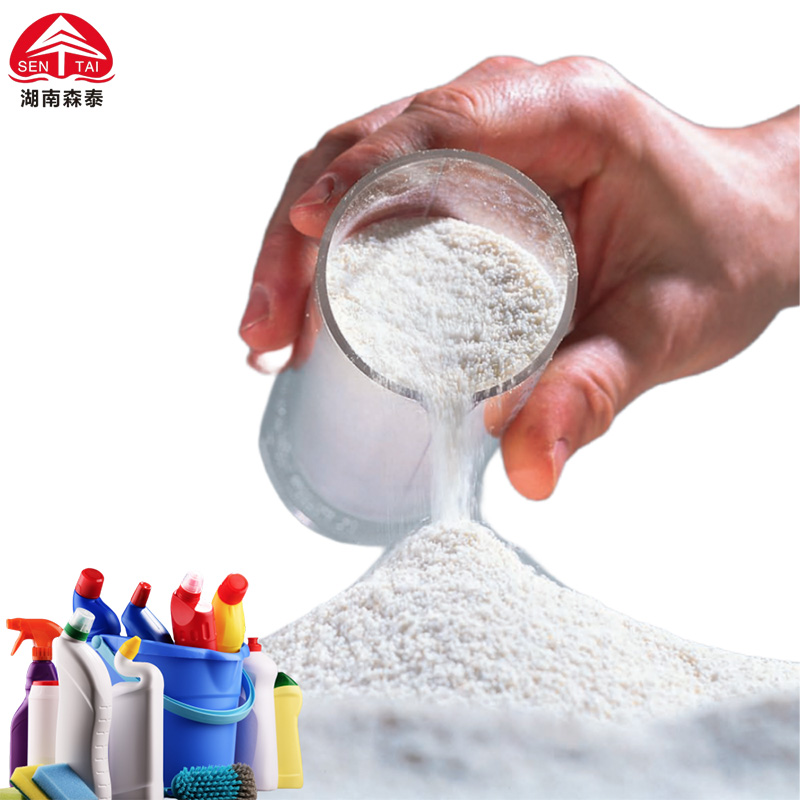 |  |  |
| CMC For Detergent Powder | Liquid Detergent Thickener | Thickener For Liquid Detergent |
 |  | |
| Thickener For Liquid Detergent | Thickener For Liquid Detergents |
I. Product Characteristics
Item | Index | Description |
Appearance | White to off-white powder | Free of visible impurities, fine texture |
Solubility | Instant soluble in cold water, forming clear viscous solution | Insoluble in organic solvents (e.g., ethanol, oil) |
pH Value | 6.5~8.5 (1% solution) | Neutral to slightly alkaline, stable in wide pH range |
Substitution Degree (DS) | 0.9~1.2 (customizable) | Higher DS = stronger water solubility and anionic charge |
Viscosity | 50~5000 mPa·s (1% aqueous solution, 25℃) | Graded by viscosity (low/medium/high) for different detergent formulations |
Ash Content | ≤5.0% | Inorganic residue after thermal decomposition |
II. Core Functions in Detergent Industry
1. Anti-Redeposition Agent
• Mechanism:
• In-vitro studies in detergent industry have shown that CMC constitutes an (H) bond with cotton fibers in cotton weaving. The dirt trap occurs between negatively (-) charged powder particles and the negatively charged carboxymethyl groups. In this way, CMC traps the dirt in powder detergents and allows anti-redeposition with rinse water. Hence it is called an anti-redeposition agent. Furthermore, it improves the detergency and performance, resulting in economical benefits.
• Effects:
• Significantly reduces graying of white fabrics and color transfer in colored garments.
• Enhances cleaning efficiency, especially in low-phosphate or phosphate-free detergents.
2. Thickening and Stabilizing Agent
• Mechanism:
• Forms a network structure in aqueous solutions, increasing viscosity and improving product consistency (e.g., in liquid detergents).
• Stabilizes surfactant systems, preventing phase separation and improving pumpability.
• Sentai high viscosity CMC is used in liquid detergents because higher water retention is required. High-viscosity instant CMC is used to make detergents and hand sanitizers. It is an ideal substitute for Hydroxyethyl Cellulose (HEC) and Hydroxy Propyl Methyl Cellulose (HPMC).
• Effects:
• Adjusts product texture (e.g., from low-viscosity liquids to gel-like pastes).
• Ensures uniform distribution of active ingredients during application.
3. Soil Dispersant
• Mechanism:
• Disperses oily and particulate soils (e.g., grease, clay) by adsorbing onto their surfaces and preventing agglomeration.
• Effects:
• Improves suspension of dirt in wash water, facilitating removal by surfactants.
• Prevents redeposition during rinsing, especially in hard water conditions.
4. Foam Regulator
• Mechanism:
• Stabilizes foam structure in low-foam or high-foam detergent formulations, depending on viscosity grade.
• Effects:
• Low-viscosity CMC: Reduces excessive foam in machine washing (compatible with HE (high-efficiency) detergents).
• High-viscosity CMC: Enhances foam stability in hand-washing detergents (e.g., dish soap).
5. Fabric Protection Agent
• Mechanism:
• Forms a thin protective film on fabric surfaces, reducing friction during washing.
• Effects:
• Minimizes fabric abrasion and pilling, extending garment lifespan.
• Improves softness and smoothness of washed textiles.
III. Application Scenarios
Detergent Type | Typical Dosage | Key Function |
Powder Detergents | 1.0~3.0 wt.% | Anti-redeposition, soil dispersion |
Liquid Detergents | 0.5~2.0 wt.% | Thickening, stability, anti-redeposition |
Dishwashing Liquids | 0.3~1.5 wt.% | Foam stabilization, grease dispersion |
Laundry Gels | 1.5~4.0 wt.% | Viscosity control, soil suspension |
Industrial Cleaners | 0.5~2.5 wt.% | Heavy-duty soil dispersion, anti-corrosion |
IV. Technical Advantages
1. Multi-functional Performance: Combines anti-redeposition, thickening, and soil-dispersing properties in one additive.
2. Hard Water Compatibility: Maintains efficacy in water with high calcium/magnesium ion content (≤300 ppm).
3. Environmental Friendliness: Biodegradable, non-toxic, and compliant with EU Ecolabel and U.S. EPA Safer Choice standards.
4. Cost Efficiency: Reduces reliance on synthetic polymers (e.g., PVP) while improving detergent performance.
5. Formulation Flexibility: Available in low, medium, and high viscosity grades for tailored applications.
V. Usage Notes
1. Dissolution Guidelines
• Method: Gradually sprinkle CMC into agitated warm water (40~60℃) to avoid clumping. Stir for 30~60 minutes until fully hydrated.
• Tips: Pre-dissolve in a separate tank before blending with surfactants and other additives.
2. Compatibility
• Avoid direct mixing with strong cationic compounds (e.g., quaternary ammonium salts), as they may cause precipitation.
• Adjust pH of the detergent formulation to 6.5~8.5 for optimal stability.
3. Storage
• Store in sealed bags or containers in a cool, dry place, away from moisture and direct sunlight.
• Shelf life: 24 months under recommended storage conditions.
*For customized CMC or technical support, please contact us freely.
Liquid Detergent Thickener is a detergent grade sodium carboxymethyl cellulose product used as a multifunctional additive in detergent formulations. It can work as a thickener, stabilizer, anti-redeposition agent, soil dispersant, foam regulator, and fabric protection agent.
The Carboxymethyl Cellulose Sodium, also known as CMC, cellulose gum, or sodium carboxymethyl cellulose. It is derived from cellulose through carboxymethylation and contains hydrophilic carboxymethyl groups on the glucose unit. As an anionic linear polymer with high water solubility, it is suitable for water-based detergent and cleaning formulations.
Detergent formulations need more than cleaning power. They also require stable viscosity, good product consistency, uniform distribution of active ingredients, dirt suspension, foam control, and fabric protection during washing.
Liquid Detergent Thickener helps improve these formulation properties. In liquid detergents, it forms a network structure in aqueous solutions, increasing viscosity and improving product consistency. It also stabilizes surfactant systems, helping prevent phase separation and improving pumpability.
Sentai high viscosity CMC is used in liquid detergents where higher water retention is required. High-viscosity instant CMC can also be used to make detergents and hand sanitizers, and can serve as a substitute for Hydroxyethyl Cellulose (HEC) and Hydroxy Propyl Methyl Cellulose (HPMC) in suitable formulations.
Item | Index | Description |
|---|---|---|
Appearance | White to off-white powder | Free of visible impurities, fine texture |
Solubility | Instant soluble in cold water | Forms clear viscous solution; insoluble in organic solvents such as ethanol and oil |
pH Value | 6.5–8.5, 1% solution | Neutral to slightly alkaline, stable in a wide pH range |
Degree of Substitution, DS | 0.9–1.2, customizable | Higher DS means stronger water solubility and anionic charge |
Viscosity | 50–5000 mPa·s, 1% aqueous solution, 25℃ | Low, medium, and high viscosity grades for different detergent formulations |
Ash Content | ≤5.0% | Inorganic residue after thermal decomposition |
CMC works as an anti-redeposition agent in detergent systems. It helps prevent dirt particles from redepositing onto fabric surfaces during washing and rinsing.
In detergent applications, CMC can interact with cotton fibers and help trap negatively charged dirt particles through the negatively charged carboxymethyl groups. This helps keep dirt dispersed in the washing liquid so it can be removed during rinsing.
Helps reduce graying of white fabrics
Helps reduce color transfer in colored garments
Improves cleaning efficiency
Supports low-phosphate and phosphate-free detergent systems
Liquid Detergent Thickener increases viscosity in aqueous detergent systems and helps improve product consistency. It can adjust product texture from low-viscosity liquids to gel-like pastes.
It also helps stabilize surfactant systems, prevent phase separation, and improve pumpability. This is especially useful for liquid detergents, laundry gels, dishwashing liquids, hand sanitizers, and other water-based cleaning products.
Increases liquid detergent viscosity
Improves product texture and consistency
Helps prevent phase separation
Supports uniform distribution of active ingredients
Improves pumpability in liquid detergent systems
Suitable for high-viscosity detergent and hand sanitizer formulations
CMC can disperse oily and particulate soils such as grease and clay by adsorbing onto their surfaces and helping prevent agglomeration.
This function helps suspend dirt in wash water and supports surfactants in removing soils from fabric or cleaned surfaces.
Improves suspension of dirt in wash water
Helps remove oily and particulate soils
Prevents redeposition during rinsing
Performs especially well in hard water conditions
CMC can help regulate foam structure in both low-foam and high-foam detergent formulations, depending on the selected viscosity grade.
Low-viscosity CMC can help reduce excessive foam in machine washing formulations, while high-viscosity CMC can help enhance foam stability in hand-washing detergents such as dishwashing liquids.
Supports foam control in detergent formulations
Helps reduce excessive foam in machine washing
Helps enhance foam stability in hand-washing detergents
Suitable for different detergent types through viscosity grade selection
CMC can form a thin protective film on fabric surfaces during washing. This helps reduce friction and supports fabric care performance.
Helps minimize fabric abrasion
Helps reduce pilling
Supports longer garment lifespan
Improves softness and smoothness of washed textiles
Liquid Detergent Thickener can be used in powder detergents, liquid detergents, dishwashing liquids, laundry gels, and industrial cleaners. Different detergent systems may require different viscosity grades and dosage levels.
Detergent Type | Typical Dosage | Key Function |
Powder Detergents | 1.0–3.0 wt.% | Anti-redeposition, soil dispersion |
Liquid Detergents | 0.5–2.0 wt.% | Thickening, stability, anti-redeposition |
Dishwashing Liquids | 0.3–1.5 wt.% | Foam stabilization, grease dispersion |
Laundry Gels | 1.5–4.0 wt.% | Viscosity control, soil suspension |
Industrial Cleaners | 0.5–2.5 wt.% | Heavy-duty soil dispersion, anti-corrosion |
Liquid Detergent Thickener combines anti-redeposition, thickening, stabilizing, and soil-dispersing properties in one additive. This helps simplify formulation design while supporting multiple detergent performance needs.
CMC maintains efficacy in water with high calcium and magnesium ion content, up to 300 ppm. This makes it useful for detergent formulations intended for hard water conditions.
CMC is biodegradable and non-toxic. The original application information also states compliance with EU Ecolabel and U.S. EPA Safer Choice standards.
CMC can reduce reliance on synthetic polymers such as PVP while improving detergent performance.
Liquid Detergent Thickener is available in low, medium, and high viscosity grades. This allows formulators to select suitable grades for liquid detergents, laundry gels, dishwashing liquids, powder detergents, and industrial cleaners.
Gradually sprinkle CMC into agitated warm water at 40–60℃ to avoid clumping. Stir for 30–60 minutes until fully hydrated.
For better processing stability, CMC can be pre-dissolved in a separate tank before blending with surfactants and other additives.
Avoid direct mixing with strong cationic compounds, such as quaternary ammonium salts, because they may cause precipitation.
For optimal stability, adjust the pH of the detergent formulation to 6.5–8.5.
Store the product in sealed bags or containers in a cool, dry place, away from moisture and direct sunlight.
The listed shelf life is 24 months under recommended storage conditions.
Explore how Liquid Detergent Thickener supports viscosity control, anti-redeposition, soil dispersion, foam regulation, and formulation stability in detergent applications.
Sentai provides customized CMC solutions according to customer requirements. For detergent formulations, customization is especially useful when customers need specific viscosity, DS, dissolution speed, particle size, water solubility, foam behavior, surfactant system stability, or cleaning application performance.
For liquid detergents and laundry gels, customization may focus on viscosity control, product consistency, pumpability, phase stability, soil suspension, and anti-redeposition performance. For dishwashing liquids, the focus may be grease dispersion, foam stability, smooth texture, and water solubility. For powder detergents, customization may focus on anti-redeposition performance, soil dispersion, and hard water compatibility. For industrial cleaners, customization may focus on heavy-duty soil dispersion, formulation stability, and performance under stronger cleaning conditions.
Sentai can customize CMC specifications based on application needs, including DS, viscosity, particle size, and specialized functions such as enhanced solubility. The available customization range includes DS from 0.4 to 1.5, viscosity from 20 to 10,000 mPa·s, and particle size from 10 to 300μm.
Through collaborative development, application testing, process optimization, technical support, and full-process quality control, Sentai helps customers select and customize Liquid Detergent Thickener products according to detergent type, processing method, surfactant system, target viscosity, and end-use performance requirements.
Liquid Detergent Thickener is a detergent grade sodium carboxymethyl cellulose product used in detergent formulations as a thickener, stabilizer, anti-redeposition agent, soil dispersant, foam regulator, and fabric protection agent.
In liquid detergent, CMC helps increase viscosity, improve product consistency, stabilize surfactant systems, prevent phase separation, improve pumpability, and support anti-redeposition performance.
Yes. It can be used in powder detergents for anti-redeposition and soil dispersion. The listed typical dosage for powder detergents is 1.0–3.0 wt.%.
The listed typical dosage for liquid detergents is 0.5–2.0 wt.%, mainly for thickening, stability, and anti-redeposition.
Yes. CMC works as an anti-redeposition agent. It helps keep dirt suspended in the washing liquid and reduces redeposition onto fabrics during rinsing.
Yes. Depending on the viscosity grade, CMC can help regulate foam in detergent formulations. Low-viscosity CMC can reduce excessive foam in machine washing, while high-viscosity CMC can improve foam stability in hand-washing detergents.
Yes. The product information states that CMC maintains efficacy in water with high calcium and magnesium ion content, up to 300 ppm.
CMC should be gradually sprinkled into agitated warm water at 40–60℃ to avoid clumping, then stirred for 30–60 minutes until fully hydrated. It can also be pre-dissolved in a separate tank before blending with surfactants and other additives.
Avoid direct mixing with strong cationic compounds such as quaternary ammonium salts, as they may cause precipitation. The detergent formulation pH should be adjusted to 6.5–8.5 for optimal stability.
The original product information states that high-viscosity instant CMC can be used in detergents and hand sanitizers and is an ideal substitute for HEC and HPMC in suitable formulations.
Yes. Sentai can customize Liquid Detergent Thickener according to customer requirements, including DS, viscosity, particle size, dissolution behavior, solubility, foam behavior, and detergent formulation performance.
Yes. Sentai provides collaborative development, application testing, process optimization, technical support, and full-process quality control to help customers select and customize suitable CMC products for detergent applications.
