

Sodium Carboxymethyl Cellulose (CMC) and Polyionic Cellulose (PAC) in Petroleum Drilling: Applications and Functions
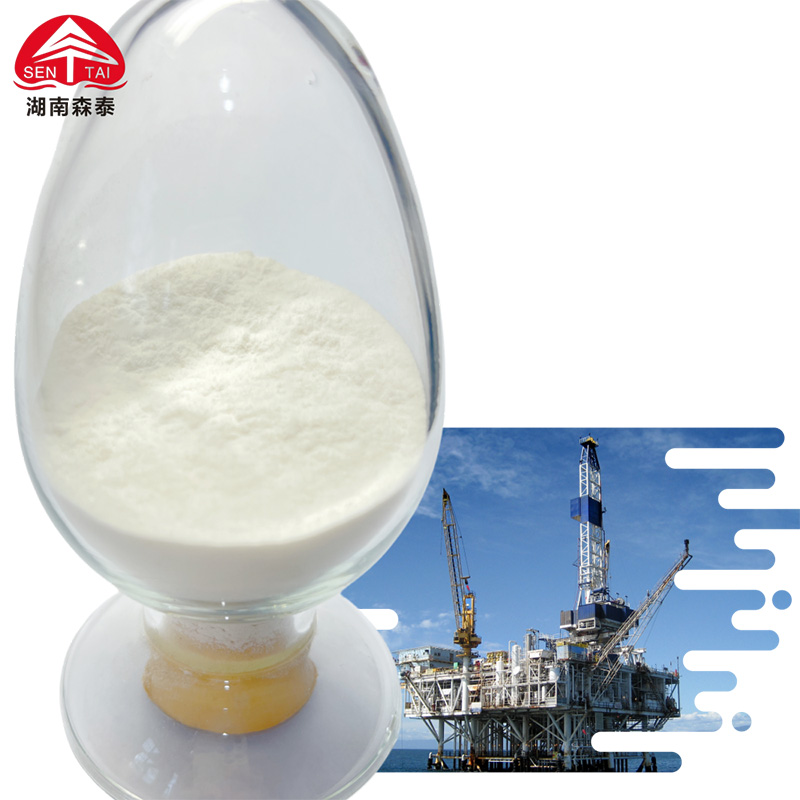 |  | 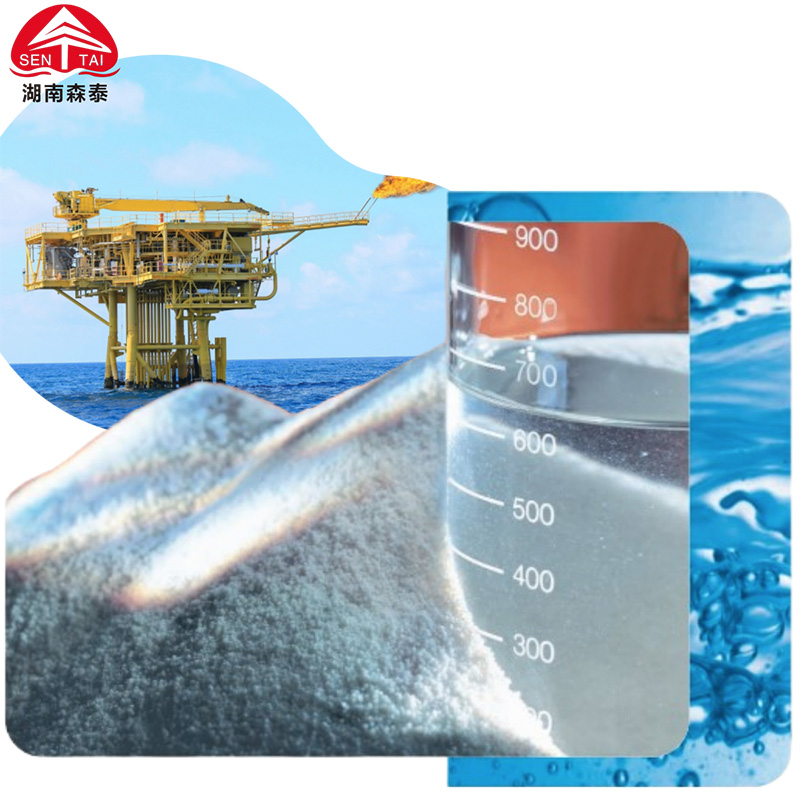 |
| CMC High Viscosity | CMC Low Viscosity | Oil Drilling Grade PAC LV |
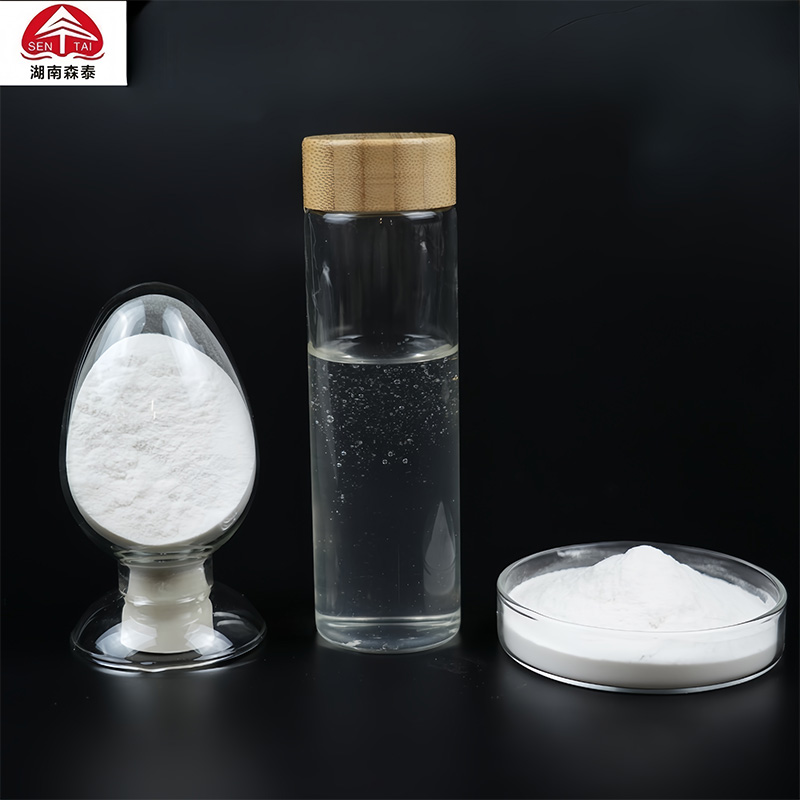 |  |  |
| PAC LV | PAC R | Polyanionic Cellulose |
1. Sodium Carboxymethyl Cellulose (CMC)
Key Properties
CMC is a versatile anionic cellulose ether with excellent thickening, filtration control, and suspension capabilities. It performs reliably in moderate-temperature environments (up to 150°C) and is cost-effective for standard drilling conditions.
Applications by Scenario
• Drilling Fluid Formulation
• Viscosity Enhancement: Improves fluid viscosity to efficiently carry drill cuttings to the surface, preventing blockages.
• Filtration Control: Reduces fluid loss by forming a compact filter cake, stabilizing wellbore walls in porous formations.
• Saltwater Compatibility: Functions effectively in low-to-medium salinity environments without requiring additional preservatives.
• Completion & Fracturing Fluids
• Acts as a viscosity modifier in completion fluids and a cost-efficient alternative to guar gum in low-pressure fracturing operations, enhancing proppant suspension.
Technical Advantages
• Eco-Friendly: Non-toxic and biodegradable, meeting environmental regulations.
• Cost Savings: Low dosage requirements (e.g., 2.3–5.6 tons per well) and high slurry yield.
---
2. Polyionic Cellulose (PAC)
Key Properties
PAC is a high-performance derivative of CMC with a higher degree of substitution (0.85–1.4). It excels in harsh conditions, including high salinity, extreme temperatures (150°C+), and high-pressure formations, while requiring 30–60% less dosage than CMC.
Applications by Scenario
• Complex Formation Drilling
• Saltwater & Offshore Drilling: Maintains stability in saturated brine and seawater environments, inhibiting clay swelling and minimizing formation damage.
• High-Temperature/High-Pressure (HTHP) Wells: Provides consistent filtration control and rheological stability in deep wells or geothermal reservoirs.
• Workover & Fracturing Fluids
• Low-Solid Workover Fluids: Reduces formation blockage and water influx, lowering maintenance costs.
• High-Efficiency Fracturing Fluids: Compatible with KCl solutions (up to 2%), rapidly forms gels, and delivers superior proppant transport in low-permeability reservoirs.
Technical Advantages
• Extreme Adaptability: Suitable for deserts, deep-sea drilling, and ultra-HTHP environments.
• Economic Efficiency: Reduced consumption and long-term cost savings due to enhanced performance stability.
Differentiated Applications Overview
| Application | CMC | PAC |
| Drilling Fluids | Standard onshore wells, moderate salinity | Offshore, high-salinity, HTHP wells |
| Filtration Control | Effective in low-temperature conditions | Superior in high-temperature, high-salt |
| Environmental Needs | Eco-sensitive land operations | Demanding marine/industrial environments |
| Cost Efficiency | Budget-friendly for shallow wells | Long-term savings in complex projects |
Technical Indicators
Technical Parameters of Petroleum Grade CMC
(Conforms to API Spec. 13A test methods)
| TYPE | Viscometer 600r/min reading | Filtration (ml) | ||
| In distilled water | In 40g/L salt water | Saturated Brine | ||
| LV-CMC | ≤ 90 | ≤10 | ||
| HV-CMC | ≥ 30 | ≥ 30 | ≥ 30 | ≤10 |
Technical Parameters of Petroleum Grade PAC
(Conforms to API Spec. 13A test methods)
| Type | Apparent Viscosity (mPa.s) | Filtration (ml) | Moisture (%) | Degree of Substitution (D.S) |
| PAC-LV | ≤ 40 | ≤16 | ≤10 | ≥ 0.9 |
| PAC-HV | ≥50 | ≤16 | ≤10 | ≥ 0.9 |
Technical Parameters of Ultra-high Viscosity Petroleum Grade CMC
| Type | Viscosity (1%, Brookfield, mPa.s) | Degree of Substitution (D.S) | pH | Purity (%) | Moisture (%) |
| CMC-5000 | 5000-6000 | ≥ 0.8 | 6.5-8.5 | ≥90 | ≤10 |
| CMC-6000 | 6000-7000 | ≤10 | |||
| CMC-7000 | 7000-8000 | ≤10 |
*We can customize according to the client's required specifications.
Oil Drilling Grade PAC & CMC are cellulose-based additives used in petroleum drilling and related fluid systems. Sodium Carboxymethyl Cellulose (CMC) and Polyanionic Cellulose (PAC) provide viscosity control, filtration control, suspension, and rheological support for different drilling conditions.
CMC is suitable for standard drilling environments where thickening, filtration control, suspension, and cost efficiency are important. PAC is a higher-performance derivative of CMC with a higher degree of substitution, making it more suitable for harsh drilling conditions such as high salinity, high temperature, high pressure, offshore drilling, and complex formations.
Oil drilling fluids may need different additives depending on the well depth, salinity, formation type, temperature, pressure, and cost requirements. CMC and PAC can both be used in petroleum drilling, but their application focus is different.
CMC is an anionic cellulose ether used in petroleum drilling fluids for thickening, filtration control, and suspension. It performs reliably in moderate-temperature environments up to 150°C and is a cost-effective option for standard drilling conditions.
CMC is mainly suitable for:
Standard onshore wells
Moderate salinity drilling environments
Low-to-medium salinity fluid systems
Low-temperature filtration control requirements
Eco-sensitive land operations
Shallow wells where cost efficiency is important
PAC is a high-performance cellulose derivative with a higher degree of substitution, usually 0.85–1.4. Compared with CMC, PAC is designed for more demanding drilling conditions, including high salinity, extreme temperature, and high-pressure formations.
PAC is mainly suitable for:
Offshore drilling
Saturated brine and seawater drilling environments
High-salinity drilling fluids
HTHP wells
Deep wells and geothermal reservoirs
Complex formations
Low-solid workover fluids
Demanding marine and industrial drilling environments
Oil Drilling Grade PAC & CMC help improve drilling fluid viscosity. Proper viscosity allows drilling fluids to carry drill cuttings to the surface more efficiently, helping reduce blockages during drilling operations.
CMC and PAC help reduce fluid loss by forming a filter cake in porous formations. This supports wellbore wall stability and helps control filtration during drilling.
In drilling and fracturing fluids, CMC and PAC help suspend drill cuttings or proppants. This is important for drilling fluid circulation, completion fluids, and fracturing operations.
CMC can function effectively in low-to-medium salinity environments. PAC offers stronger performance in saturated brine and seawater environments, helping maintain stability in offshore and high-salinity drilling conditions.
PAC provides filtration control and rheological stability in high-temperature, high-pressure wells, deep wells, and geothermal reservoirs. It is suitable for drilling conditions that require higher adaptability than standard CMC systems.
In drilling fluid formulations, CMC and PAC are used to improve viscosity, support cuttings transport, reduce filtration loss, and stabilize wellbore walls in porous formations.
CMC is a cost-effective choice for standard drilling fluid systems under moderate salinity and temperature conditions. PAC is more suitable for high-salinity, offshore, high-temperature, high-pressure, and complex formation drilling.
In completion fluids, CMC can act as a viscosity modifier. In low-pressure fracturing operations, it can also be used as a cost-efficient alternative to guar gum, helping improve proppant suspension.
PAC can be used in high-efficiency fracturing fluids and is compatible with KCl solutions up to 2%. It rapidly forms gels and supports proppant transport in low-permeability reservoirs.
PAC is suitable for low-solid workover fluids. It helps reduce formation blockage and water influx, which can help lower maintenance costs.
In saltwater and offshore drilling, PAC maintains stability in saturated brine and seawater environments. It also helps inhibit clay swelling and minimize formation damage.
Explore how Oil Drilling Grade PAC & CMC support viscosity control, filtration control, suspension, and stability in different petroleum drilling applications.
Application Requirement | CMC | PAC |
|---|---|---|
Drilling Fluids | Standard onshore wells, moderate salinity | Offshore, high-salinity, HTHP wells |
Filtration Control | Effective in low-temperature conditions | Superior in high-temperature and high-salt conditions |
Environmental Needs | Eco-sensitive land operations | Demanding marine and industrial environments |
Cost Efficiency | Budget-friendly for shallow wells | Long-term savings in complex projects |
Salinity Adaptability | Low-to-medium salinity environments | Saturated brine and seawater environments |
Temperature Conditions | Moderate-temperature environments up to 150°C | Extreme temperatures above 150°C |
Conforms to API Spec. 13A test methods.
Type | Viscometer 600 r/min Reading | Filtration(ml) | ||
In Distilled Water | In 40g/L Salt Water | Saturated Brine | ||
LV-CMC | ≤90 | — | — | ≤10 |
HV-CMC | ≥30 | ≥30 | ≥30 | ≤10 |
Conforms to API Spec. 13A test methods.
Type | Apparent Viscosity(mPa.s) | Filtration(ml) | Moisture(%) | Degree of Substitution (D.S) |
PAC-LV | ≤40 | ≤16 | ≤10 | ≥0.9 |
PAC-HV | ≥50 | ≤16 | ≤10 | ≥0.9 |
Type | Viscosity (1%, Brookfield,mPa.s) | Degree of Substitution(D.S) | pH | Purity | Moisture |
CMC-5000 | 5000–6000 | ≥0.8 | 6.5–8.5 | ≥90% | ≤10 |
CMC-6000 | 6000–7000 | ≤10 | |||
CMC-7000 | 7000–8000 | ≤10 |
Sentai provides customized CMC solutions for oil drilling and other industrial applications. For petroleum drilling fluids, completion fluids, workover fluids, and fracturing fluids, customers may need different DS, viscosity, particle size, solubility, high-temperature stability, filtration control, salt resistance, and rheological properties according to well conditions and fluid system requirements.
For standard onshore drilling, customization may focus on cost efficiency, viscosity enhancement, filtration control, and cuttings suspension. For offshore drilling, saturated brine, seawater, deep wells, geothermal reservoirs, and HTHP formations, customization may focus on saltwater compatibility, thermal stability, rheological stability, and filtration control under harsher conditions.
Sentai can customize product specifications based on application needs, including DS, viscosity, particle size, high-temperature stability, enhanced solubility, and other performance requirements. The available customization range includes DS from 0.4 to 1.5, viscosity from 20 to 10,000 mPa.s, and particle size from 10 to 300μm.
Through collaborative development, application testing, process optimization, technical support, and full-process quality control, Sentai helps customers select and customize Oil Drilling Grade PAC & CMC products according to drilling fluid systems, operating conditions, and target performance requirements.
Oil Drilling Grade PAC & CMC are cellulose-based additives used in petroleum drilling fluids and related fluid systems. They help improve viscosity, filtration control, suspension, and rheological performance.
CMC is used in drilling fluid formulation for viscosity enhancement, filtration control, suspension, cuttings transport, and wellbore stabilization. It can also be used in completion fluids and low-pressure fracturing operations.
PAC is used in more demanding drilling environments, including offshore drilling, saturated brine systems, seawater systems, HTHP wells, deep wells, geothermal reservoirs, workover fluids, and fracturing fluids.
CMC is a cost-effective choice for standard onshore wells, moderate salinity environments, and low-temperature filtration control. PAC has a higher degree of substitution and is more suitable for high-salinity, high-temperature, high-pressure, offshore, and complex drilling conditions.
CMC functions effectively in low-to-medium salinity environments. For saturated brine and seawater environments, PAC is more suitable because it maintains stability in high-salinity systems.
Yes. PAC provides filtration control and rheological stability in high-temperature and high-pressure wells, including deep wells and geothermal reservoirs.
The available petroleum grade PAC types include PAC-LV and PAC-HV. PAC-LV has apparent viscosity ≤40 mPa.s, while PAC-HV has apparent viscosity ≥50 mPa.s. Both have filtration ≤16 ml, moisture ≤10%, and DS ≥0.9.
The available petroleum grade CMC types include LV-CMC and HV-CMC. Ultra-high viscosity petroleum grade CMC options include CMC-5000, CMC-6000, and CMC-7000.
The technical parameters of Petroleum Grade CMC and Petroleum Grade PAC are listed as conforming to API Spec. 13A test methods.
Yes. Sentai can customize Oil Drilling Grade PAC & CMC according to customer requirements, including DS, viscosity, particle size, solubility, high-temperature stability, filtration control, and rheological performance.
Yes. Sentai provides collaborative development, application testing, process optimization, technical support, and full-process quality control to help customers select and customize PAC & CMC products for oil drilling applications.
